



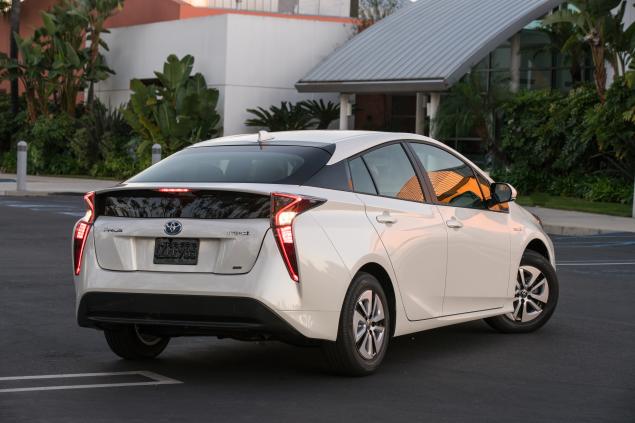
 The redesigned hatch offers a more elegant, tapered look than the outgoing 3rd Generation Prius
The interior of the new Prius has even higher-quality materials than before, more comfortable seats, and better visibility. The trunk boasts an impressive 27.4 cubic feet of storage space.For any technophiles out there, don’t miss out on the optional Advanced Technology Package, which provides dynamic radar cruise control, lane departure alert, pre-collision system with pedestrian detection, and much more! The 2016 Prius boats a ton of the latest and greatest technology
The redesigned hatch offers a more elegant, tapered look than the outgoing 3rd Generation Prius
The interior of the new Prius has even higher-quality materials than before, more comfortable seats, and better visibility. The trunk boasts an impressive 27.4 cubic feet of storage space.For any technophiles out there, don’t miss out on the optional Advanced Technology Package, which provides dynamic radar cruise control, lane departure alert, pre-collision system with pedestrian detection, and much more! The 2016 Prius boats a ton of the latest and greatest technology
Is this the perfect car?
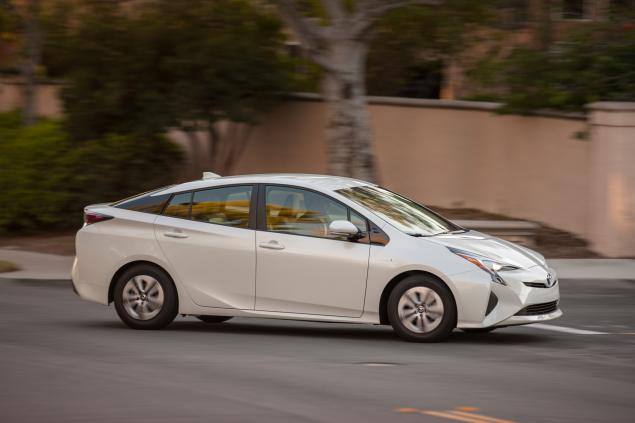
The game-changing, head-turning 2016 Toyota Prius will be available for sale next month, and we are getting pretty excited about it! This is far from a model year change; and it is not just a redesign, either. The all-new 2016 Prius has been completely re-imagined, and will be the very first Toyota product to feature the all Toyota New Global Architecture (TNGA) platform. TNGA is a global platform that will be used across the full lineup of Toyota cars and SUV’s in the coming years, beginning with the 2016 Prius. TNGA will increase economies of scale, and simplify ordering and production across Toyota’s line-up. The implementation of TNGA will be staggered over several years; although the Prius debuts in February, the RAV4, Camry, and Avalon will not switch to TNGA until 2018, and the Highlander will follow suit in 2020. The sleek, futuristic look of the new 2016 Toyota Prius will appeal to a wide audience
Needless to say, the 2016 Prius will be huge launch for Toyota. The Prius continues to raise the bar for fuel economy by delivering an incredible 58 mpg in the optional Eco trim level, and 54 mpg on all other models. And while the all-new Prius still provides the exceptional fuel economy for which it is known, its exterior barely resembles the iconic body style of the outgoing hatchback. The 2016 Prius has a more modern look, complemented by striking body lines. The hatch has a more refined, tapered look to it, and the creases in the doors and rear fenders are especially eye-catching. Despite the stylish body changes, the 2016 Prius remains aerodynamic and achieves a 0.24 coefficient of drag, allowing it to cut through the wind and boost fuel economy. And with a starting MSRP of $25,260, the 2016 Prius is only $1,000 more than a Camry LE, with 54% better fuel economy! For an additional $500, you can get the Prius Two Eco trim level and snag an extra 4 mpg.  The redesigned hatch offers a more elegant, tapered look than the outgoing 3rd Generation Prius
The interior of the new Prius has even higher-quality materials than before, more comfortable seats, and better visibility. The trunk boasts an impressive 27.4 cubic feet of storage space.For any technophiles out there, don’t miss out on the optional Advanced Technology Package, which provides dynamic radar cruise control, lane departure alert, pre-collision system with pedestrian detection, and much more! The 2016 Prius boats a ton of the latest and greatest technology
The redesigned hatch offers a more elegant, tapered look than the outgoing 3rd Generation Prius
The interior of the new Prius has even higher-quality materials than before, more comfortable seats, and better visibility. The trunk boasts an impressive 27.4 cubic feet of storage space.For any technophiles out there, don’t miss out on the optional Advanced Technology Package, which provides dynamic radar cruise control, lane departure alert, pre-collision system with pedestrian detection, and much more! The 2016 Prius boats a ton of the latest and greatest technology
The redesigned hatch offers a more elegant, tapered look than the outgoing 3rd Generation Prius
The interior of the new Prius has even higher-quality materials than before, more comfortable seats, and better visibility. The trunk boasts an impressive 27.4 cubic feet of storage space.For any technophiles out there, don’t miss out on the optional Advanced Technology Package, which provides dynamic radar cruise control, lane departure alert, pre-collision system with pedestrian detection, and much more! The 2016 Prius boats a ton of the latest and greatest technology
