


Blog / Irwin Toyota News

How Do I Turn In My Lease Before It's Due?

Leases are great. They allow you drive more car for less money, and they keep you under a factory warranty for the duration of the lease. But what happens if you still have time left on your lease when you find a new car you want and/or a lower monthly payment? Can you still get out of your lease? The answer is absolutely, although in practice it usually works best if you have 6 months or less remaining on your lease. The reason for this is because of what automotive industry insiders call "lease pull-ahead programs." Lease pull-ahead programs generally come from the financial branch of the car manufacturer, and often allow you to use the equity in your lease to satisfy remaining payments. In fact, sometimes the manufacturer will even waive some monthly payments as part of the program! Although not always the case, it is still quite common for customers to be able to come out of a lease a couple months early and get into a new lease with lower monthly payments with no money out of pocket. In short, lease pull-ahead programs can be a great way to get into a newer car faster, and for less money. But why do the manufacturers do this? Why give up a few months of higher payments? There is a two-part answer. First, it is a loyalty program to keep you with the same brand and to reward you for doing so. Second, these programs help the manufacturer control how many cars of a given model are coming off lease and arriving at the auction at any one time. If too many car leases mature in, say, August, then the market will be flooded with inventory, and the prices will fall. But if the manufacturer can pull some of these car leases forward and spread them across May, June, July, and August, then the supply will remain stable and the prices will not drop. Lease pull-ahead programs help the customers by getting them into newer cars for lower monthly payments, and they help the manufacturers not lose money at the auction, so when these programs work properly, it is a win-win all the way around. As with the initial lease, it will be important to review the terms and conditions of the program carefully to make sure that the terms of the program make sound financial sense. These programs might not always work for everyone, but they work often enough that it is worth looking into as you approach the end of your lease.
Posted in:

Related Posts

New Vehicle Owner Event 9/14

Have you purchased a new or used car recently? Irwin Toyota is hosting a New Owner Event this Thursday evening (9/14) from 5-6pm and YOU’RE INVITED!  Purchased elsewhere?  YOU’RE INVITED!  Join us for an evening of food, prizes, and education on maintaining your vehicle, how to keep its value, and optimize your gas mileage! We’d love to have you here with us!  Plan to be in attendance?  You can RSVP to Ed Kelley at Edward.Kelley@irwinzone.com or by calling 603.581.2953.  We look forward to seeing you there!

IMG_0020

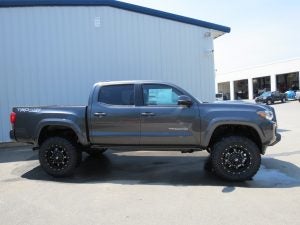
2016 Toyota Tacoma with a Lift Kit

We just got in a brand new 2016 Toyota Tacoma TRD Sport Double Cab 4x4 and promptly got it ready for some serious offroad action. We had our friends over at Truck Trends in Belmont, NH upfit this Tacoma with a 3" ReadyLift kit, as well as big, meaty 18-inch tires and blacked-out alloy rims! Check out our 2016 Toyota Tacoma with a 3" Lift Kit. Better yet, stop by and see it in person!

Can this article protect you from buying a lemon?

If you have been looking at pre-owned cars lately, you may have noticed that some of them are designated as being “certified.” A certified pre-owned vehicle is simply one that is part of a certification program, meaning that it has met certain standards for quality. The muddy the waters somewhat, certified pre-owned (CPO) programs can be further divided into “dealer CPO” and “factory CPO” programs. While any car dealer, either franchised or independent can offer a “dealer CPO” program, only a franchised dealer can offer a factory CPO program. For example, for a used Toyota to become a Toyota certified pre-owned vehicle, it undergoes a 170-point inspection. To be up to standard, a Toyota CPO vehicle cannot be more than six model years old or have more than 75,000 miles on it. Among other items, the tire tread and brake pads must both be 50% or better, and no more than two body panels can have had prior paintwork (even by a professional bodyshop). Because the tires and brakes have a high minimum requirement, many CPO Toyotas actually have new tires and brake pads installed so that they can pass the CPO inspection, providing a higher quality used car to the customer. Every factory CPO program is a little bit different, but they all have standards published online, and come backed by the manufacturer. By contrast, the “house” certification programs that some independent dealers offer can be a bit more opaque. Factory-certified pre-owned cars do not just provide peace-of-mind and higher quality, there are other benefits to the CPO program as well, such as better warranties, and sometimes, reduced interest rates. For example, a CPO Toyota comes with the balance of a 7-year/100,000-mile powertrain warranty, a 12-month/12,000-mile bumper-to-bumper warranty, and a full year of roadside assistance. Additionally, Toyota CPO models are eligible for special financing rates. We have embraced the factory CPO programs for Toyota, Scion, Ford, Lincoln, and Hyundai because we believe that these vehicles deliver the very best value to our customers. By starting with a superior product and being able to offer better warranties and lower interest rates, we hope to take the unknowns out of buying a pre-owned vehicle.