


Blog / Irwin Toyota News

Buying vs. Leasing

Leasing is a great option for someone who tends to get a new car every couple years and who drives 18,000 miles per year or less. Leasing offers several advantages over purchasing a car. First, monthly lease payments are lower than monthly car loan payments. The reason for this is that under a lease agreement, you are paying to use a car rather than paying to own a car. So rather than paying for all of the car, you pay for the depreciation of the vehicle over the life of the lease, essentially, the portion of the car that you use. Under the lease agreement, you know the sale price of the vehicle, and you know the value of the vehicle at the end of the lease, and you know the lease rate factor, which is a similar concept to an interest rate on a conventional loan. Your monthly lease payment is determined based on these numbers. At the end of the lease, you have the opportunity (but not the obligation) to purchase the vehicle at the pre-determined lease end value. In addition to the lower monthly cost, another advantage of leasing is that the vehicle is under factory warranty the whole time you own it, meaning that yo don't have to worry about costly repairs. Some people say that they do not like leasing because they want to own the car, and that is a perfectly valid opinion. However, if you take out a 5-year car loan to purchase a car, and after 3 or 4 years you go to trade the car in, you technically don't own the car yet because the bank still has the title. In this scenario, you do have a trade in, but it is just barely starting to gain equity. It might make more sense to lease a car for 2 or 3 years, and put the money you save into the bank, and use it as a down payment on your next lease. Not that you need a down payment, which is another bonus to leasing. Many leases only require the first month's payment due at signing, meaning less money out of pocket than the 10-20% down payment than many lending institutions prefer to get you the best rates on car loans. Leasing is not for everyone. Some people commute too many miles per year for a lease to make sense. Others prefer to pay off their car and just deal with repairs such as tires, brakes, emissions system, etc. as needed. For many people, though, the combination of lower monthly cost and the peace of mind of always having a warranty makes leasing an excellent choice.
Posted in:

Related Posts

New Vehicle Owner Event 9/14

Have you purchased a new or used car recently? Irwin Toyota is hosting a New Owner Event this Thursday evening (9/14) from 5-6pm and YOU’RE INVITED!  Purchased elsewhere?  YOU’RE INVITED!  Join us for an evening of food, prizes, and education on maintaining your vehicle, how to keep its value, and optimize your gas mileage! We’d love to have you here with us!  Plan to be in attendance?  You can RSVP to Ed Kelley at Edward.Kelley@irwinzone.com or by calling 603.581.2953.  We look forward to seeing you there!

IMG_0020

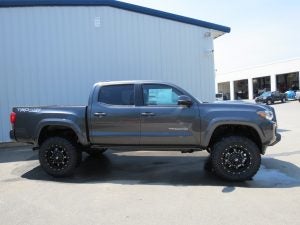
2016 Toyota Tacoma with a Lift Kit

We just got in a brand new 2016 Toyota Tacoma TRD Sport Double Cab 4x4 and promptly got it ready for some serious offroad action. We had our friends over at Truck Trends in Belmont, NH upfit this Tacoma with a 3" ReadyLift kit, as well as big, meaty 18-inch tires and blacked-out alloy rims! Check out our 2016 Toyota Tacoma with a 3" Lift Kit. Better yet, stop by and see it in person!

Can this article protect you from buying a lemon?

If you have been looking at pre-owned cars lately, you may have noticed that some of them are designated as being “certified.” A certified pre-owned vehicle is simply one that is part of a certification program, meaning that it has met certain standards for quality. The muddy the waters somewhat, certified pre-owned (CPO) programs can be further divided into “dealer CPO” and “factory CPO” programs. While any car dealer, either franchised or independent can offer a “dealer CPO” program, only a franchised dealer can offer a factory CPO program. For example, for a used Toyota to become a Toyota certified pre-owned vehicle, it undergoes a 170-point inspection. To be up to standard, a Toyota CPO vehicle cannot be more than six model years old or have more than 75,000 miles on it. Among other items, the tire tread and brake pads must both be 50% or better, and no more than two body panels can have had prior paintwork (even by a professional bodyshop). Because the tires and brakes have a high minimum requirement, many CPO Toyotas actually have new tires and brake pads installed so that they can pass the CPO inspection, providing a higher quality used car to the customer. Every factory CPO program is a little bit different, but they all have standards published online, and come backed by the manufacturer. By contrast, the “house” certification programs that some independent dealers offer can be a bit more opaque. Factory-certified pre-owned cars do not just provide peace-of-mind and higher quality, there are other benefits to the CPO program as well, such as better warranties, and sometimes, reduced interest rates. For example, a CPO Toyota comes with the balance of a 7-year/100,000-mile powertrain warranty, a 12-month/12,000-mile bumper-to-bumper warranty, and a full year of roadside assistance. Additionally, Toyota CPO models are eligible for special financing rates. We have embraced the factory CPO programs for Toyota, Scion, Ford, Lincoln, and Hyundai because we believe that these vehicles deliver the very best value to our customers. By starting with a superior product and being able to offer better warranties and lower interest rates, we hope to take the unknowns out of buying a pre-owned vehicle.